The annual exempt amount and the rates
For 2026/27, 6 April 2026 to 5 April 2027, the Capital Gains Tax annual exempt amount is £3,000 per individual, the same as 2025/26 and down sharply from £12,300 a few years ago. Gains above it on shares and funds are taxed at 18% for basic-rate taxpayers and 24% for higher and additional-rate taxpayers. Those rates have applied since 30 October 2024 and were left alone at the Autumn 2025 Budget. Your rate depends on where the gain sits once stacked on your income, so a single disposal can be part-taxed at 18% and part at 24%.
Section 104 pooling and the 30-day rule
The UK does not use simple FIFO for shares. All shares of the same class in the same company form a Section 104 holding, a single pool with an averaged cost that is apportioned pro rata when you sell part of it. Before the pool, HMRC applies matching rules in order:
- Same-day rule. A disposal is matched first to any shares of the same class bought that day.
- The 30-day rule. Then to shares bought in the following thirty days. This is the bed and breakfast rule, and it stops you selling to bank a loss and buying back the next morning.
- Section 104 pool. Whatever is left comes out of the averaged pool.
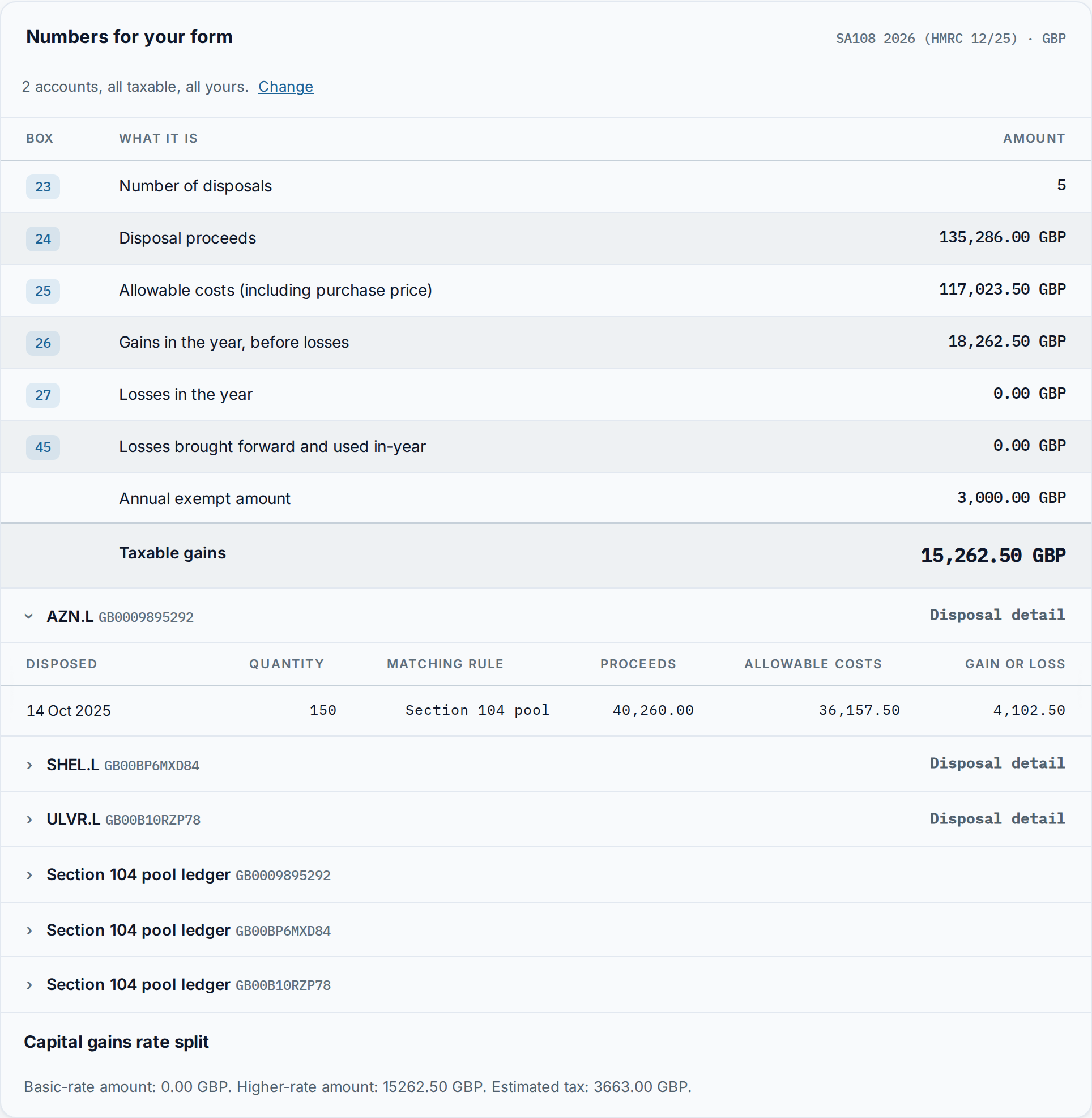
Why this trips people up. Sell a fund and rebuy it ten days later and the disposal matches the rebuy, not the pool, so a loss you thought you had harvested is deferred instead. The pack names the matching rule on every row, which is the fastest way to spot it.
Excess reportable income, the number nobody sends you
A fund with UK reporting status can allocate income to you that it never actually paid. It is taxable as income on the deemed distribution date, six months after the fund's reporting period ends, and it also increases the cost of the units that earned it, so the same money is not taxed again as a gain later.
Fund houses publish these figures in reports that rarely reach investors. Record what your fund reported, together with any equalisation on units you bought mid-period, and the pack carries the taxable amount to SA106 and the cost uplift into the Section 104 pool at the same time.
The dividend allowance and rates
Dividends are taxed under income tax rather than CGT. The first £500 is tax-free, unchanged for 2026/27. Above it:
The basic and higher dividend rates rose by 2 percentage points from 6 April 2026, announced at the Autumn 2025 Budget. The additional rate is unchanged. Notes still showing 8.75% and 33.75% are on the 2025/26 figures.
ISAs and SIPPs sit outside all of this
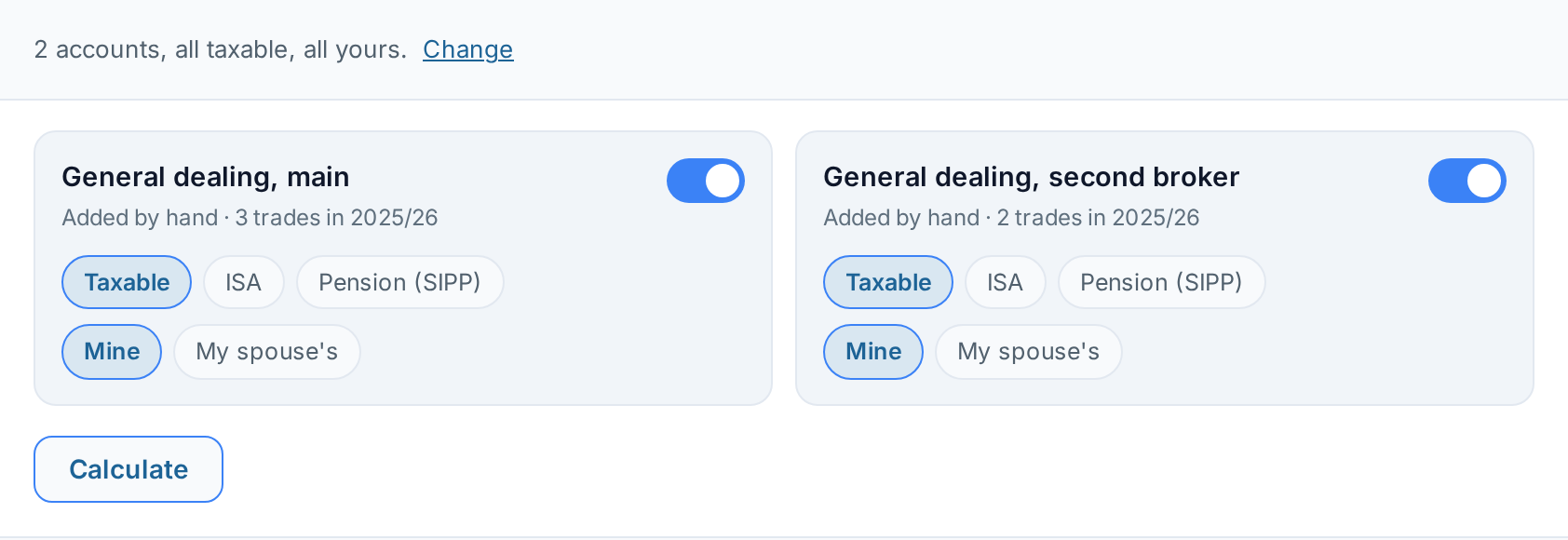
Gains and dividends inside a Stocks and Shares ISA, annual allowance £20,000, or a SIPP are free of CGT and dividend tax and are not reported on Self Assessment. Only a taxable general investment account reaches SA108. Hold the wrappers in AllInvestView for the complete picture and mark them in the accounts step so they never inflate a reportable gain.
- Capital gains tax calculator for UK shares, free same-day, 30-day and Section 104 matching for your own trades.
- Capital gains tax calculator, estimate CGT on a UK share disposal.
- UK ISA guide, use the £20,000 allowance to shelter gains and dividends.
- Investing in the UK, brokers, exchanges and the wider UK tax picture.
- Cost basis methods, how pooling and matching compare with FIFO and LIFO.
- Import your trades, so the pool has every buy behind it before the matching starts.
- Investment tax reporting guide, records and cross-border reporting.
Not tax advice. This page summarises the main UK investment tax rules for the 2025/26 and 2026/27 tax years. Rates and rules change and your circumstances differ. Confirm your position with HMRC or a qualified tax adviser before acting.
 AllInvestView